Angus Glen · Markham
Angus Glen: historic-look homes with late-1990s glass
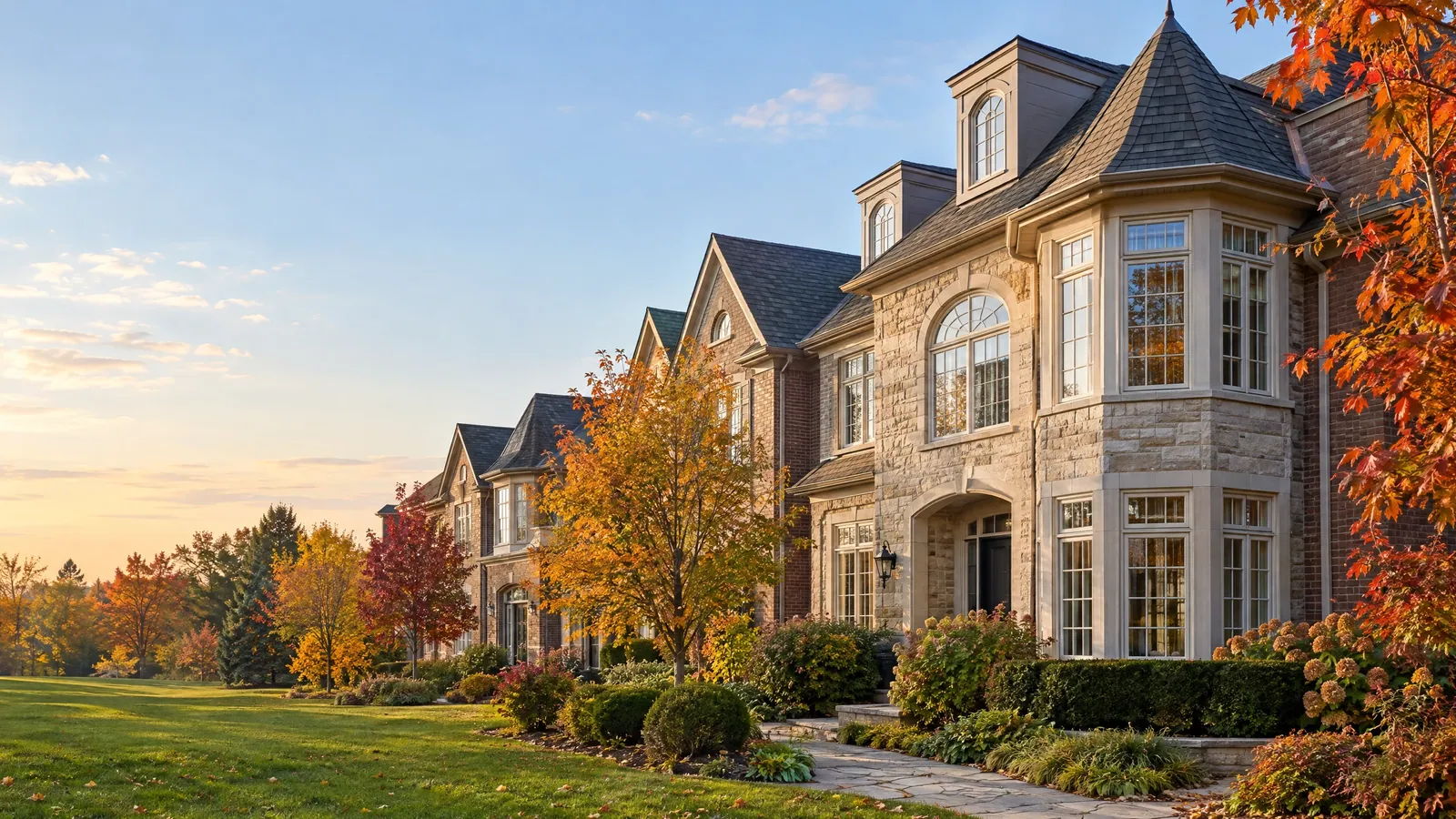
Angus Glen was planned to look older than it is. The East Village, begun in the late 1990s, was designed with the appearance of historic houses, with garages set on rear laneways to keep the fronts uncluttered; the West Village followed in the mid-2000s. On houses like these, window work is judged by whether it keeps the look: grilles that line up, arches that keep their curve, a tall foyer unit replaced without disturbing the trim. We connect Angus Glen owners with independent local pros who work that carefully.
At a glance
- Built
- East Village late 1990s; West Village mid-2000s
- Style
- Historic-look fronts, colonial grilles, rear-lane garages
- Common jobs
- Fogged arched and transom units, large panes, garden and French doors
- Rules
- Not a heritage district; same-size replacement follows ordinary City rules
East Village and West Village: two build periods
The two halves of Angus Glen are several years apart, and that shows in the work owners ask for. In the late-1990s East Village, original sealed units are at the age when seals give out, so fog between the panes is the usual call, often in several windows over a few years. The mid-2000s West Village is younger; fog turns up there too, but the calls are as likely to be a cracked pane, a garden door that won't latch or an early seal failure.
Keeping the historic look when glass is replaced
On a front designed to look historic, small details carry the look. When a sealed unit is replaced, the grilles between the glass need the same pattern and bar width, and the colour should match the neighbouring windows. A pro can order the new unit to match if they see a close-up before measuring.
Replacing the glass alone leaves the window's frame, trim and proportions exactly as built, which is one reason a glass-only repair suits these fronts well. Foggy window repair explains how a unit is measured and swapped.
Arched, transom and large family-room glass
- Arched and transom glass: a fogged half-round or arched transom can usually be replaced as a sealed unit made to a template of the opening, keeping the frame and trim.
- Large family-room panes: tall fixed units are measured and made to size; handling and access can add to the job, so mention the size when you send the request.
- Two-storey foyer windows: a unit high above the entrance may need scaffolding or a lift; a photo from the floor and one from outside help the pro plan it.
Doors: garden, French and sliding
- Patio door replacement: for French or garden doors whose frames have swollen or whose sills have softened.
- Sliding door repair: rollers, locks and adjustments for a slider that drags or won't latch.
- Door glass: a fogged or cracked panel, or a sidelight beside the front door, replaced in safety glass.
Full replacement without losing the style
When the frames themselves are failing, new windows are the right call, and how they go in matters on a historic-look front. An insert, or retrofit, fits a new frame inside the old one. It leaves the exterior trim alone, but the added frame thickens the sightlines and reduces the glass, which can change how an arched window reads from the street. A full-frame replacement takes the old window back to the rough opening and keeps the glass close to its original size, with more trim and finish work.
Ask the pro to show you, on your own windows, how much glass each method gives up. Replacement windows sets out the options. For qualifying ENERGY STAR windows, Ontario's Home Renovation Savings program offers rebates, usually after a home energy assessment; a glass-only repair doesn't qualify.
Angus Glen questions
The arched transom over our front door has fogged. Does the frame have to come out?
Usually not. The pro makes a template of the opening, or measures it closely, and orders a sealed unit to that shape with the grilles matched. The frame, trim and casing stay. A new frame is needed only when the frame itself is damaged. See arched and transom glass.
Is it better to replace the glass or the whole window in a late-1990s house?
If the frames are sound and the problem is fog, replacing the glass usually makes more sense: it keeps the window as built and generally costs less. Replacement is worth pricing when frames are cracked or leaking, hardware is failing throughout, or you want new windows for comfort. Our repair or replace guide goes through the choice.
Before listing an Angus Glen house, should we replace the windows or fix the failing ones?
Usually fix the failing ones. Buyers and inspectors notice fogged units, cracked panes and doors that don't lock, and fixing those before listing removes easy objections. Replacing sound windows mainly to sell is harder to justify. Repair what's visibly failing, keep the written quotes and invoices for the buyer, and leave the bigger choice to the next owner.
Will a retrofit (insert) window make my glass area smaller?
Usually a little. An insert sits inside the old frame, so its own frame adds a band around the glass on every side. On an arched or divided window that can change the proportions; a full-frame replacement avoids it. Ask the pro how much glass each option leaves on your particular windows.
Will the installer protect my trim, paint and floors?
A careful installer covers floors and works to leave interior trim intact, but ask rather than assume. Before accepting a quote, ask how finishes will be protected, who repairs trim if it's disturbed, and whether cleanup is included. The pro we match you with does the work and answers for it.