Repair or replace
Repair or replace? How to judge a Markham window before anyone quotes
If the frame is sound and closes square, a fogged sealed unit or a worn crank is usually a repair, even on an arched or foyer window: the glass is made to measure and the grilles can be matched. Replace the whole window when the frame itself is failing or several units are going at once. Ontario's rebate pays only for whole windows; in the heritage districts, the City's grant leans the other way.
Frame first: soft, stuck or out of square?
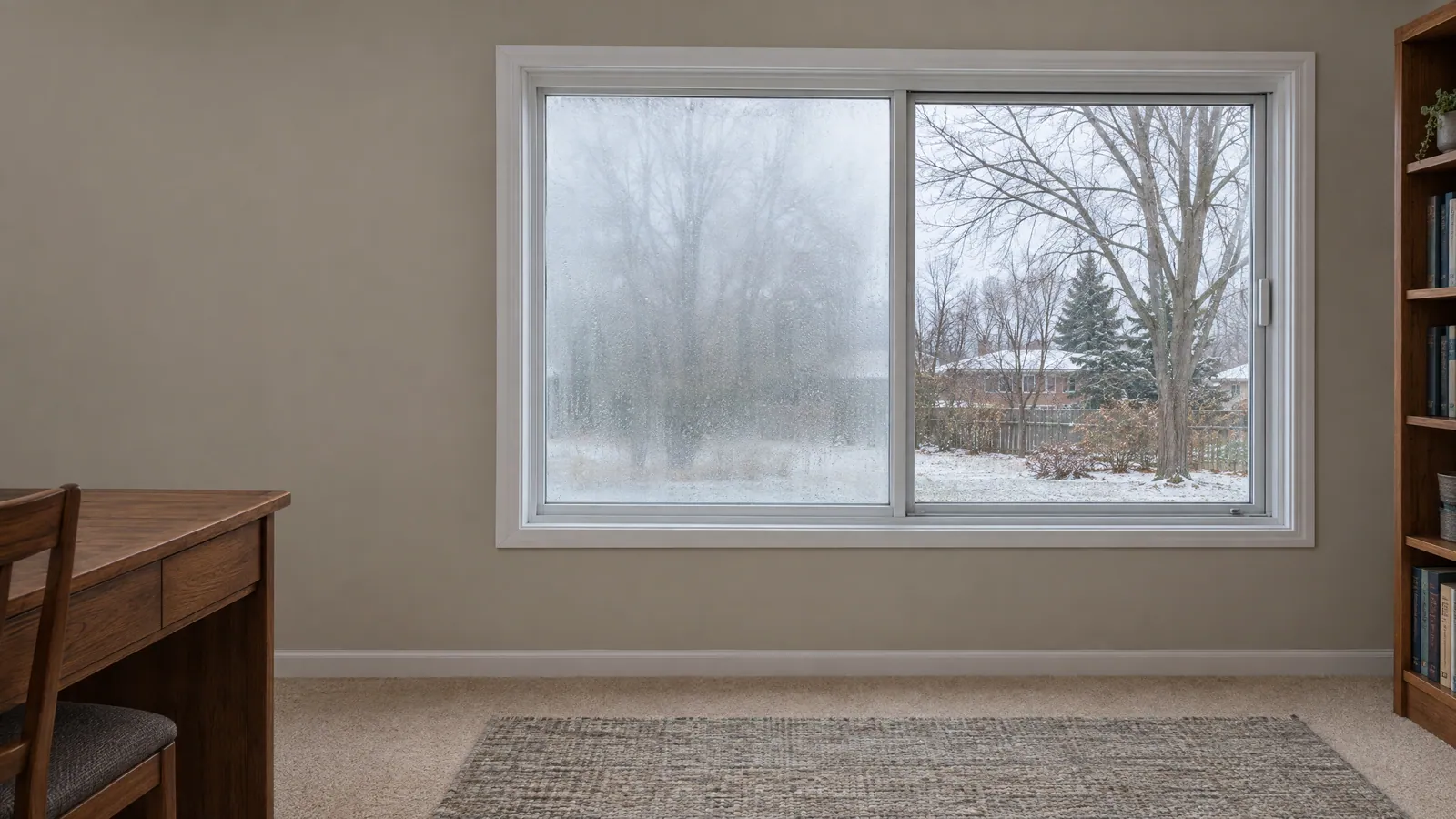
Most repair-or-replace questions are settled by the frame, not the glass. A fogged or cracked pane is a glass problem. A frame that lets water in, has split at the corners or has twisted so the sash no longer closes evenly is a window problem, and new glass won't cure it.
Nearly half of Markham's homes were built between the early 1980s and the mid-2000s, so many windows here are old enough for a seal or a crank to fail and young enough that the frame is often worth keeping.
| Where the trouble is | What you see | What usually fixes it |
|---|---|---|
| The glass | Fog, streaks or droplets between the panes; a crack | A new sealed unit in the existing sash |
| The moving parts | A crank that spins, a lock that won't catch, a sash that drags | A new operator, hinge, lock, roller or weatherstrip |
| The frame | Staining on the sill or drywall, split corners, a sash that binds whatever is adjusted | A new window, retrofit or brick-to-brick |
We connect you with an independent local glass professional who measures, quotes and does the work. We don't sell windows, and the pro confirms on site which row you're in.
If only the glass has failed
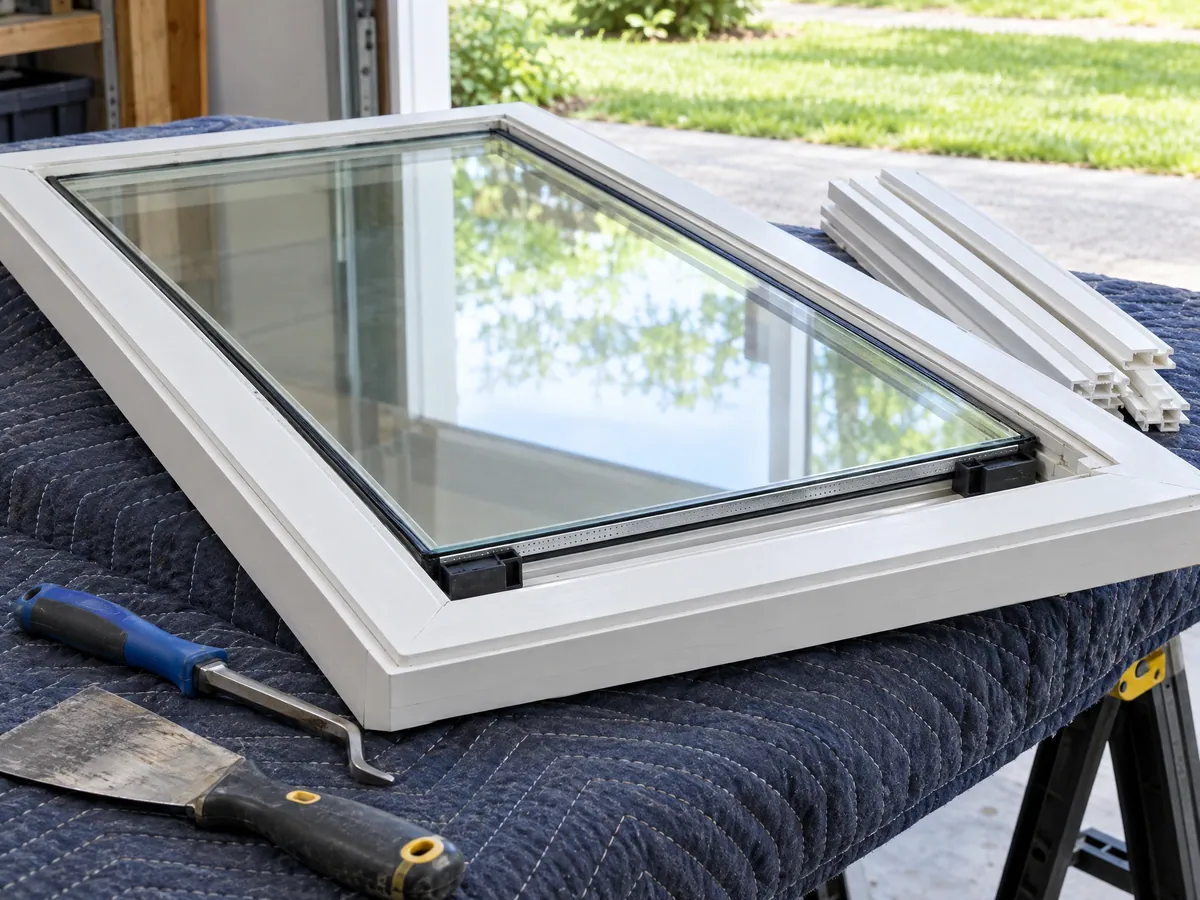
Fog between the panes means the edge seal of the sealed unit, which older documents call a thermopane, has let go. The window around it may be perfectly serviceable. A new sealed unit is made to measure and set into the existing sash: the frame stays in the wall, the interior trim isn't disturbed, and the window works as before.
That matters most on the glass Markham houses are known for: a tall foyer unit, a picture window over the stairs, a half-round above a pair of casements. Replacing those windows means new trim and exterior capping; replacing the glass usually doesn't. Grilles between the panes can be reproduced in the new unit, so bring a photo of the window beside it.
Defogging, which cleans and vents the unit, can improve the view for a while but doesn't restore the seal. The foggy sealed unit page covers both.
If the hardware or weatherstrip has worn
A window that won't close tight has often lost a part, not its usefulness. Casement operators wear, hinges sag, multipoint locks stop pulling the sash in and weatherstrip flattens; on sliders, the rollers wear and the sash drags. Each is usually replaced on its own. Before anyone quotes replacement for a drafty room, ask whether the sash is actually pulling tight. Window repair covers cranks, locks and balances, and a patio slider that sticks or won't latch is often a rollers-and-lock job, as sliding door repair explains.
If the frame or sash is rotting, warped or cracked
This is where replacement earns its cost: staining that returns after the caulking is redone, split frame corners, a sash that binds whatever is adjusted, several units failing in one window, or wood that is soft rather than just in need of paint.
There are two kinds of replacement. A retrofit, or insert, sits inside the existing frame. It's less disruptive, but the new frame adds its own depth, so the glass gets smaller; on a family-room or foyer window you look through every day, that can be noticeable. Brick-to-brick, the GTA term for full-frame, takes the old frame out to the rough opening, keeping more glass and exposing any damage behind it, with more finishing inside and out.
Ask each quote to say which it is and how much the sightline changes. Replacement windows goes through styles and materials. The City's building permit page lists same-size replacement among projects that don't need a building permit; altering a structural or exterior wall does, so ask Building Standards before widening an opening.
Special cases in Markham
Arched, half-round and transom glass
When a half-round or eyebrow unit fogs, the frame around it is rarely the problem, and a new shaped unit can be made from a template of the opening, sunburst grilles included. Two-storey foyer glass is the same job with more ladder work. Arched and transom glass explains what a pro needs to see. In neighbourhoods planned to look older, such as Cornell and Angus Glen, the grille pattern is part of the street, so ask for it to be matched.
Heritage district windows
In Unionville, Markham Village, Thornhill and Buttonville the question is partly decided for you. The City's stated objective for its heritage districts is plain: "It is better to repair than to restore / It is better to restore than replace." The plans ask for original frames and sash to be repaired, and exterior changes need a heritage permit first. The heritage district window guide sets out the detail.
Condo units
In most Ontario condos, windows and balcony doors are common elements. An owner who wants to change them needs board approval and a registered agreement first. For a fogged unit or a stiff balcony slider in the Markham Centre towers, report it to management and ask who owns the glass.
What the rebates and grants actually pay for
The funding runs the opposite way to the repair-first logic.
| Option | Home Renovation Savings (Ontario) | Heritage Property Grant (City of Markham) |
|---|---|---|
| New sealed unit in the existing frame | No | No |
| Hardware or weatherstrip | No | No; routine maintenance is excluded |
| Repair of an original sash and frame | No | Can qualify on an eligible heritage property |
| Whole new ENERGY STAR certified window | Can qualify, per rough opening, generally with a home energy assessment | No; a reconstruction matching the original can qualify |
Outside the heritage districts, nothing currently pays toward a glass-only fix. That doesn't make replacement the better buy: for one fogged unit in a sound frame, new glass is usually still the smaller job. When several windows are failing and the frames are tired, ask for both prices. Conditions change, so check the Home Renovation Savings page and the City's 2026 grant guidelines.
Reading two quotes side by side
Quotes for the same window can look far apart because they describe different jobs. Check that each names the option (sealed unit, parts, retrofit or brick-to-brick), the glass and grille pattern, the trim, capping and caulking, who installs, and what the warranty covers for glass, frame and installation.
A quote from photos can change once the pro measures, particularly for shaped units; ask for any change in writing. If you sign at home, Ontario gives you a cooling-off period, and a bill can't climb far past a written estimate without your agreement (Ontario's rules).
Selling soon? What a buyer's inspector tends to notice
Markham's resale market is busy, and window questions often come up before a listing. Inspectors notice fogged units, cracked glass, stained sills and windows that won't open or lock. Most of those are glass or parts repairs. Fix what visibly fails, keep the invoices, and leave new styles to the next owner.
Before you ask for a quote: what to note at each window
- Where the moisture is: if it doesn't wipe off the room side, it's between the panes
- Whether the sash closes, locks and seals evenly
- Staining on the sill or trim, and the caulking outside
- How wide the frame is, if a retrofit's smaller glass would bother you
- The grille pattern of the windows beside it
- Whether siding work is planned; windows and cladding meet at the trim, so plan them together
- One photo of the whole window and one of a frame corner
Not sure which way to go? Send those two photos with a quote request, and the local pro we match you with can tell you the smallest fix that will work.
Frequently asked questions
Is it worth replacing just the glass in an older window?
Often, yes, if the frame is sound. A new sealed unit clears fog or a crack and leaves the frame, trim and grille pattern where they are. It's less sensible when the sash is cracked or water is getting in around the frame; then new glass goes into a window that is still failing. See foggy sealed units.
How long should a window last before it needs replacing?
There's no reliable number, and age on its own isn't a reason to replace. Watch for signs instead: fog in several units, a sash that no longer closes evenly, staining on the sill or drywall, split frame corners, or air coming through the frame itself rather than past worn weatherstrip. One of those usually means a repair; several at once, around the house, is when replacement starts to make sense.
Does replacing the glass make a window more energy efficient?
It restores a unit whose seal has failed, and it can be a modest upgrade if the new glass has a low-E coating; ask what's specified. It won't stop air leaking through a worn frame or past a sash that doesn't close tight. For a measured efficiency claim, look for ENERGY STAR certification, which applies to a whole window rather than glass on its own.
Is it worth replacing windows before selling a house?
Usually not the whole set. Inspectors and buyers notice failed seals, cracked glass, soft sills and windows that won't open, and those can often be fixed with new sealed units or parts. A full replacement before listing is a large spend the buyer may not value as you do. Fix what's visibly failing and keep the invoices. Window repair covers the smaller fixes.
Retrofit or brick-to-brick: which kind of replacement do I need?
A retrofit sits inside the existing frame: less disturbance to walls and trim, but a smaller glass area. Brick-to-brick takes the old frame out to the rough opening, which keeps more glass and exposes any hidden damage, with more finishing inside and out. A sound, square old frame suits a retrofit; a damaged one suits full-frame. Replacement windows compares them.
Should the whole house be done at once, or window by window?
Either can make sense. Doing the failing units first spreads the cost and lets you judge the result before committing. Doing them together means one measuring visit and a consistent grille pattern and colour across the front of the house. If you phase it, record the exact style so later windows match, and ask for a quote both ways.