Sliding patio doors
Sliding door dragging or stuck? Fix the rollers and track first
A sliding patio door that needs a shove or hops its track is rarely a worn-out door. In a house, and in the balcony sliders of Markham's newer towers, the cause is usually tired rollers, a gritty or dented track, or a latch that has drifted below its keeper, all swapped while the glass and frame stay put. We connect you with an independent local pro who repairs sliders; they'll say plainly whether it's a parts job.
- Rollers and tracks, not the door
- A short video helps the quote
- Balcony sliders: board first
What it's doing
Why sliding doors get hard to move
Won't slide, or needs both hands
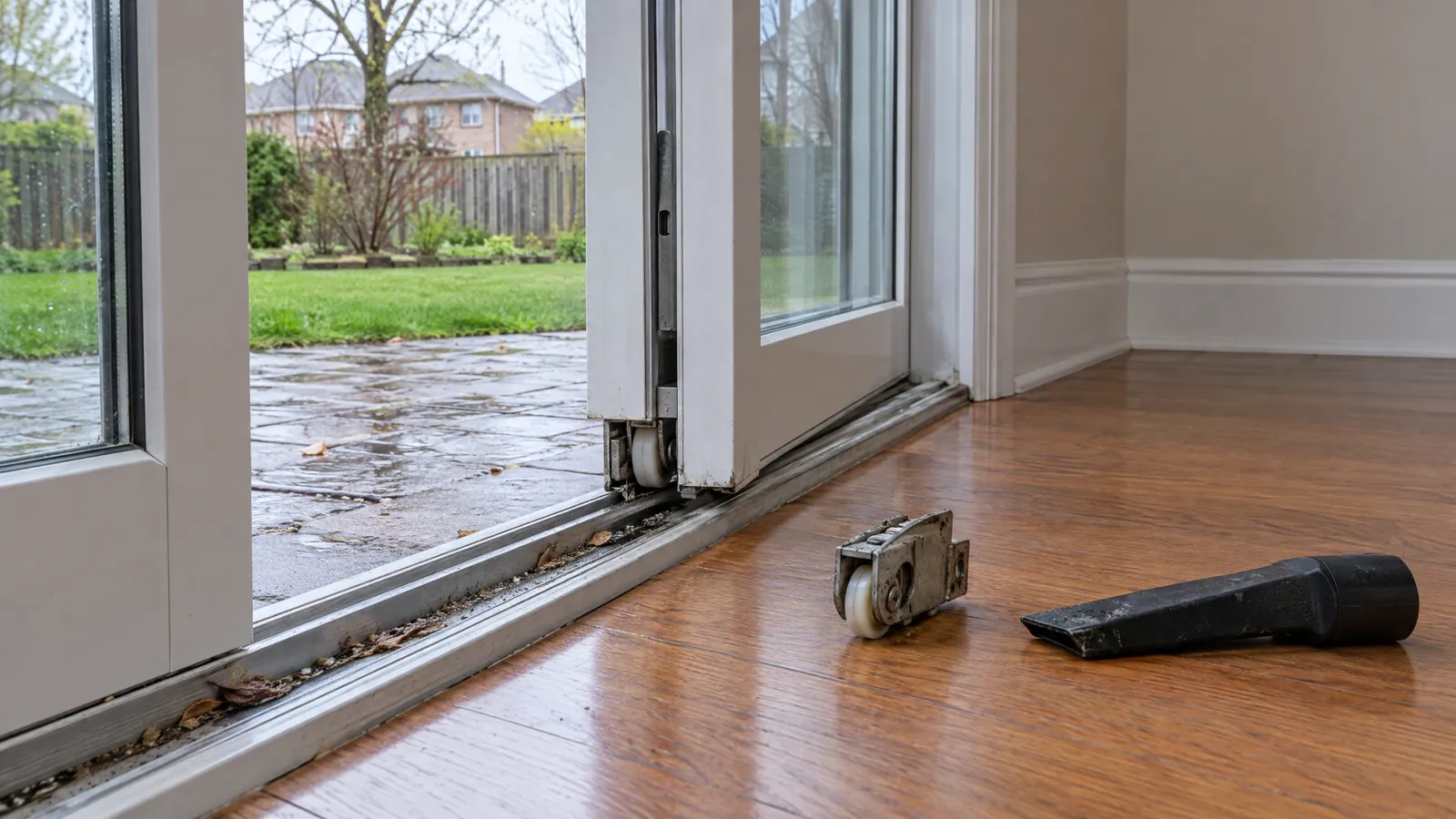
Rollers worn flat or seized solid, or grit and leaves lodged in the track. Sometimes the rollers just need raising.
Won't lock or latch
Worn rollers lower the panel until the latch no longer lines up. Raising them often cures it.
Came off the track
Usually a broken roller or a bent track. The panel is heavy, so leave it closed until it's looked at.
Whistles or lets in water
Flattened weatherstrip or blocked drain holes. See the checks below.
The parts
Rollers, tracks, handles and locks: what can be swapped
Rollers sit in the bottom rail of the sliding panel, most with an adjustment screw; replacing them means lifting the panel out. A grooved or dented aluminum track can often be capped with a new rail.
Handles and locks are matched to the originals; for a discontinued door, photograph the hardware and any frame label. The screen has rollers too, and screen door repair can happen on the same visit.
Drafts and leaks
Drafts and water at the sill
Clear the track and drain holes
Weep holes in the sill let rainwater out. When grit blocks them, water backs up in a downpour. Vacuum the track and clear them.
Replace the weatherstrip
The pile strips along the panel edges flatten with use, and new ones stop the whistle.
Have the sill checked
Water on the floor below, or a soft subfloor, means the sill or flashing may have failed.
The glass
Fogged or cracked patio door glass
A slider's sealed unit can be replaced without replacing the door. It must be tempered or laminated under the Ontario Building Code safety-glazing rule (2012/2017 text; the pro confirms the current edition), so it's ordered to size.
Fog or haze between the panes
The edge seal has failed. A new unit goes into the existing panel, grilles matched. See foggy sealed units.
A crack or a chip
Keep the door shut and pets and children clear. Door glass replacement explains what to photograph.
Past repair
Signs repair won't be enough
A frame rotted at the sill or twisted so the panel binds on new rollers, leaks that continue after the drains and weatherstrip are sorted, or parts no longer made. Any of these makes a new patio door worth pricing too.
What affects the repair
What a sliding door repair quote depends on
- Which parts have failed: rollers, track, lock or weatherstrip
- Whether the panel comes out, and its weight
- Whether parts for your door are still made
- Track condition: cleaned, capped or bent
- Access, including condo elevator bookings
A short video of the door moving and its size allow a first figure, confirmed on site.
Condo balcony doors
Condo balcony sliders: who's responsible
In most Ontario condos, balcony doors are common elements. The corporation generally decides who repairs them, and changing one needs board approval and a section 98 agreement first.
Start with property management, and send their answer with your request. In the towers of Markham Centre, ask about elevator booking too.
Questions
Sliding door repair questions
Explore your options
Related door and glass help
Pros we work with repair sliders in houses and towers, including Markham Centre, Milliken Mills, Thornhill, Berczy Village and Box Grove.
Film the door moving and send it
A few seconds of the door opening and closing, and a close shot of the track, usually shows what's worn. We send it to a slider pro; if it's only rollers, they'll say so.