Storm doors
Storm doors that protect the entry and suit the house
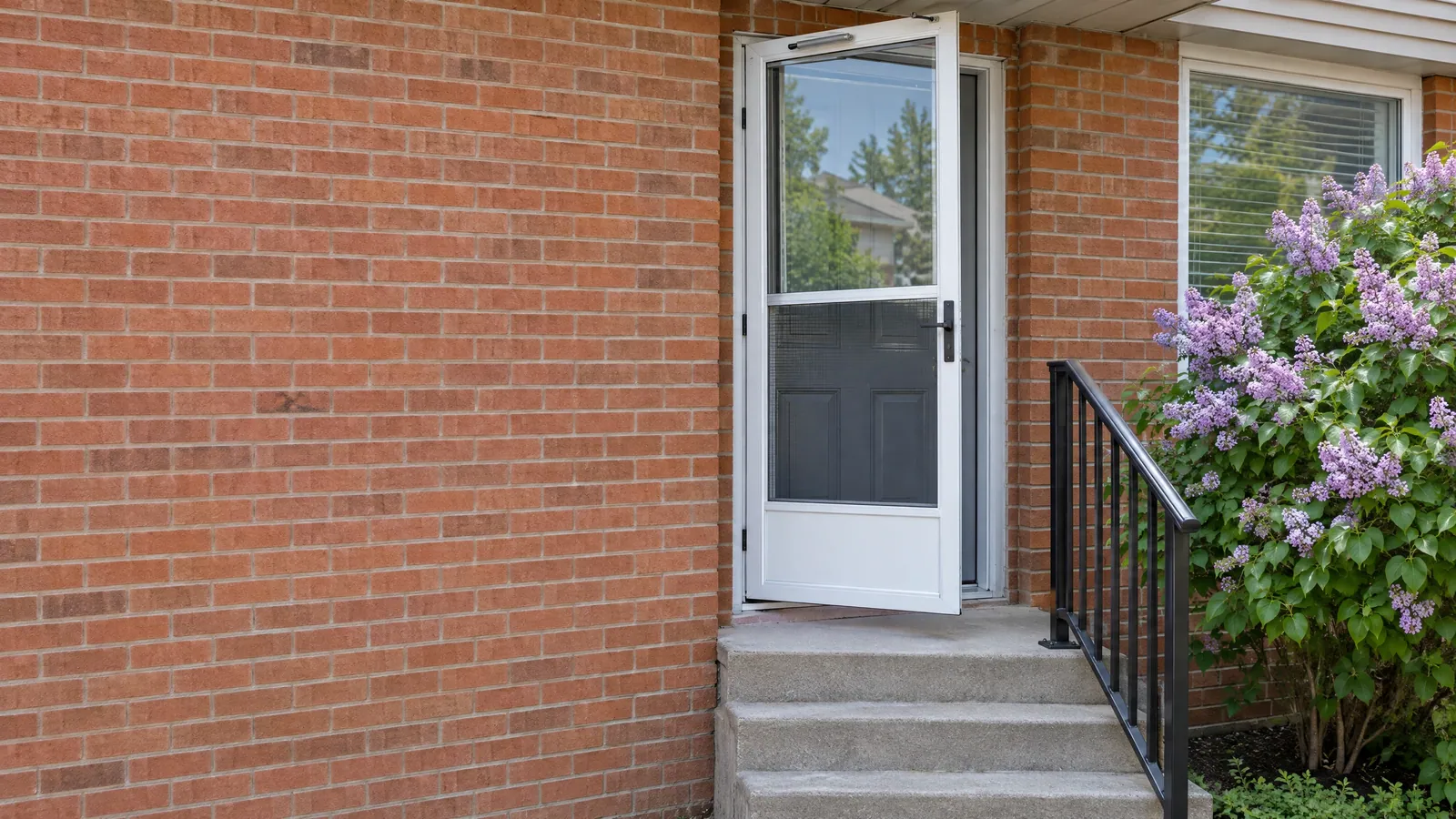
A storm door puts a lighter second door in front of the entry: glass to keep wind and rain off the main door in winter, a screen for air in summer. When one misbehaves, it's usually hardware, and those are quick fixes. When it's time for a new one, the style should suit the home, and on a heritage house that usually means wood. We connect you with an independent local pro who repairs and hangs storm doors.
- Closers, latches and sweeps fixed
- Full-view or ventilating styles
- Wood storm doors in heritage districts
Hardware first
Closers, latches and sweeps
None of these needs a new door.
Slams, or won't close
The closer needs adjusting, or has lost pressure and is replaced. A wind chain stops gusts yanking the door open.
Won't latch
The door has sagged on its hinges or the latch has worn. Rehanging or a new handle set fixes it.
Gap at the bottom
The sweep has torn or slipped. It slides back down or is replaced.
Rattling glass or screen
Loose retainer clips or a worn panel gasket, both replaceable.
Why have one
What a storm door does for an entry
It shelters the main entry door from rain, snow and wind, which helps a painted or wood door keep its finish, and in warm weather it switches to a screen so the main door can stand open.
It isn't right for every entry. Over a door that takes strong afternoon sun, a full-glass storm door can trap heat against it; ask the pro about ventilating options there.
Styles
Full-view, ventilating and retractable-screen styles
Full-view
A single tall glass panel that keeps the front door on display, traded for a full screen when it's warm.
Ventilating
A glass panel that slides to open a screen, so there's no seasonal swap.
Retractable screen
The screen rolls into the door's frame when it's not needed. Patio and French door versions are under screen doors.
Wood storm door
A traditional frame with glass and screen inserts that change by season.
Glass and screens
Glass and screen panels: safety glass and swaps
Storm doors are one of the places the Ontario Building Code requires safety glass, tempered or laminated (2012/2017 text; the pro works to the current edition), so a new panel is made to size rather than cut from ordinary glass.
On many storm doors the glass and screen are separate panels that trade places with the season, so a broken glass panel is replaced on its own and a torn screen rescreened. For the main door or its sidelights, see door glass replacement.
Quote factors
What decides the price of a storm door
- Repair or a new door, and which parts are worn
- Style: full-view, ventilating or retractable screen
- Material: aluminum, vinyl or wood
- Standard size, or custom for an older or unusual opening
- Glass type, frame colour and hardware finish
Measure inside the trim around the door (installers call it the brick mould) and include a picture. Expect the pro to re-measure before anything is ordered.
Heritage districts
Wood storm doors in heritage districts
Markham's district plans encourage a traditional, simple screen or storm door of wooden construction (Buttonville district plan), and Markham Village's guidelines prefer wooden storms whenever applicable because metal conducts cold (Markham Village plan). A new storm door in any of the four districts may need a heritage permit, so ask heritage staff first.
A wood storm door is usually made to the opening and painted to suit. For original sash, see wood window repair; the heritage guide covers the permit and grant.
Questions
Storm door questions
Explore your options
Related help for the entry
Pros we work with repair and hang storm doors across Markham, including Markham Village, Unionville, Thornhill, Buttonville and Milliken Mills.
Tell us the opening size and the style you want
Send the opening's width and height, a picture of the entry, and whether you want a repair or a new door. A local storm door pro quotes it.