Older and heritage homes
Keeping original wood sash windows working in Markham's old villages
Many of Markham's oldest houses stand in four villages: Unionville, Markham Village, Thornhill and Buttonville. Each is a heritage conservation district, and each plan says much the same about original windows: repair them rather than replace them. That's usually good news. A sash that sticks, rattles or has lost its putty can be put right by someone who works in wood and glass. We connect you with an independent local pro who does this work, and you can ask for a written quote set out for the City's heritage grant.
- Repair before replacement, as the plans ask
- Original glass kept wherever it can be
- Quotes written up for the heritage grant, on request
What you have
What's typical: double-hung wood sash, one-over-one and six-over-six
The heritage plan for Markham Village describes the most common window in its older homes as a double-hung wooden sash, either one-over-one or six-over-six: one pane, or six, in each of the two sashes. The Unionville plan adds segmental arches on brick houses and the odd round or Gothic-arched window in a gable.
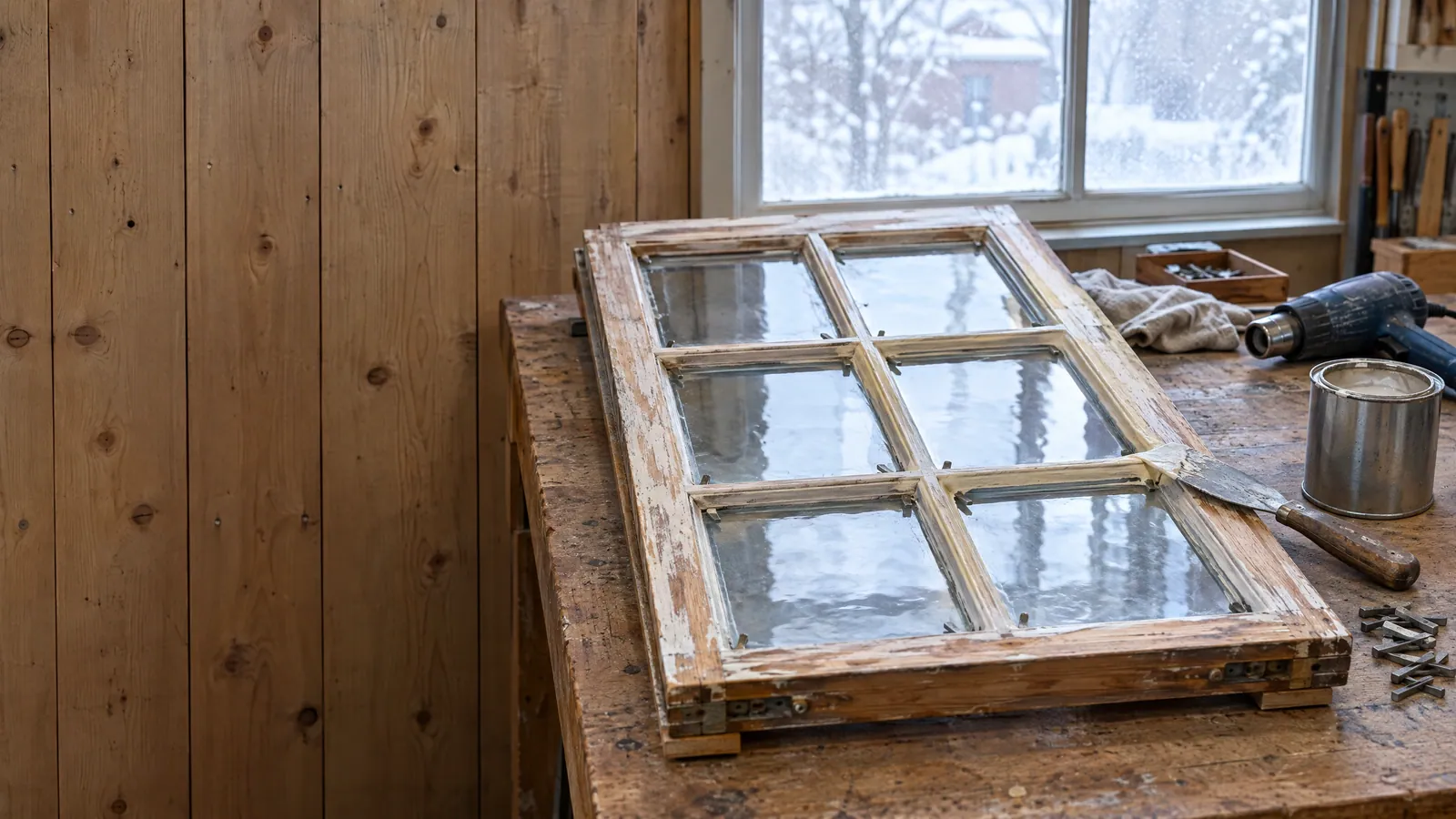
These windows were made to be taken apart. Each sash slides in its own channel, often balanced by cords and weights hidden in the frame, and every pane is held with small metal points and glazing putty. That's why a sticking sash, a broken cord or crumbling putty is rarely a reason to lose the window.
The repairs
Repairs a skilled trade can do
Most of this is careful, unhurried work, and it's what the district plans have in mind when they say repair. Newer windows with sealed units are covered in the windows overview.
Reglazing and putty
Loose or missing putty lets water sit against the wood. The old compound is softened and removed, the glass bedded and pinned, and new putty tooled and painted.
Sash cords and weights
A sash that drops or won't stay up has usually lost a cord. The weight pocket is opened, a new cord fitted, and the sash rehung so it runs smoothly.
Rot patching
Soft wood at the bottom rail or sill can be cut out and replaced with a matching piece, or consolidated and filled where it's shallow. Only the damaged part goes, as the plans ask.
Weatherstrip and fit
Discreet weatherstrip in the channels and at the meeting rail cuts rattles and drafts without changing how the window looks from the street.
Old glass
Old crown and cylinder glass: keep it where you can
Nineteenth-century window glass was made by hand. The Markham Village plan notes that most panes of the period were crown glass, available only in small sizes, with larger and stronger panes arriving by the 1840s. Old glass has a slight ripple and the odd bubble that modern float glass doesn't, and once a pane breaks, it's gone.
The same plan asks owners to reuse original glass whenever possible. A careful restorer removes panes one at a time, cleans them and sets them back in fresh putty. If one cracks, restoration glass with a similar texture can be cut to fit; custom glass covers glass cut to size.
Storms
Exterior wood storms: what the heritage plans prefer for energy
The Buttonville and Thornhill plans describe traditional exterior storm windows as the most appropriate way to improve energy efficiency while protecting the heritage window, and Unionville's plan says much the same. The Markham Village guidelines add a practical reason to choose wood, since metal conducts cold, and suggest custom wood storms for windows with curved heads.
A storm adds a second layer of glass and a still air space outside the old sash, cuts drafts and keeps rain off the putty. Interior storms are an option where exterior ones won't work. The plans apply the same thinking to doors and encourage a simple wooden screen or storm door; storm doors covers those.
Beyond repair
If a sash is beyond saving: replicas in the same material
Sometimes a sash is too far gone. The plans then ask for a replica in the same material, style and proportion, with true divided lites where the original had them, and Markham Village's guidelines allow new sash in the existing frame. Some plans accept a double-glazed wood unit as a fallback, but it has to keep the original pane division with muntin bars you can see from outside.
Snap-in interior grilles and tape imitations aren't accepted, and neither is resizing the opening to suit a stock window. A joiner who builds replica sash can often set the old glass into the new wood.
Before work starts
Heritage permit and grant: do this before work starts
In the four districts, exterior changes to a property, windows included, need a heritage permit. City heritage staff can approve work that follows the district plan, but ask before the work begins, not after. Our heritage district guide sets out the steps.
The City's Heritage Property Grant, new in 2026, can pay part of the cost of repairing original windows and doors, and it asks for two professional quotes for the same scope of work. When you ask for a quote, say it's for the grant, and we'll look for pros who do heritage sash work and can write it up that way. The City's heritage staff also give restoration advice and keep a directory of skilled trades, a neutral place to find a second name.
If your house is in Thornhill west of Yonge Street, it's in Vaughan, which has its own heritage district and its own rules.
Questions
Questions about old sash
Explore your options
Related heritage help
Wood sash work comes up most in the older parts of Markham, including Markham Village, Unionville, Thornhill and Buttonville.
Ask for a heritage-sash specialist
Tell us the street or area, how many windows and what's wrong, and whether you plan to apply for the heritage grant. We'll pass it to a local pro who repairs wood sash and can set the quote out in writing.