Hardware repair
Windows that won't open, close or lock: hardware repair in Markham
A window that sticks, drops or won't lock usually has one worn part, and the glass and frame around it are fine. Cranks, balances, locks, hinges and weatherstrip are replaceable pieces on most windows built in Markham since the 1980s. We connect you with an independent local pro who can identify the part from a photo, source it and fit it, so you're not buying a window to fix a latch.
- The worn part, not the whole window
- Parts matched from photos of the hardware
- Drafts and weatherstrip sorted before winter
Symptoms
Match the symptom to the part
Here's what usually sits behind each fault.
Crank spins or strips
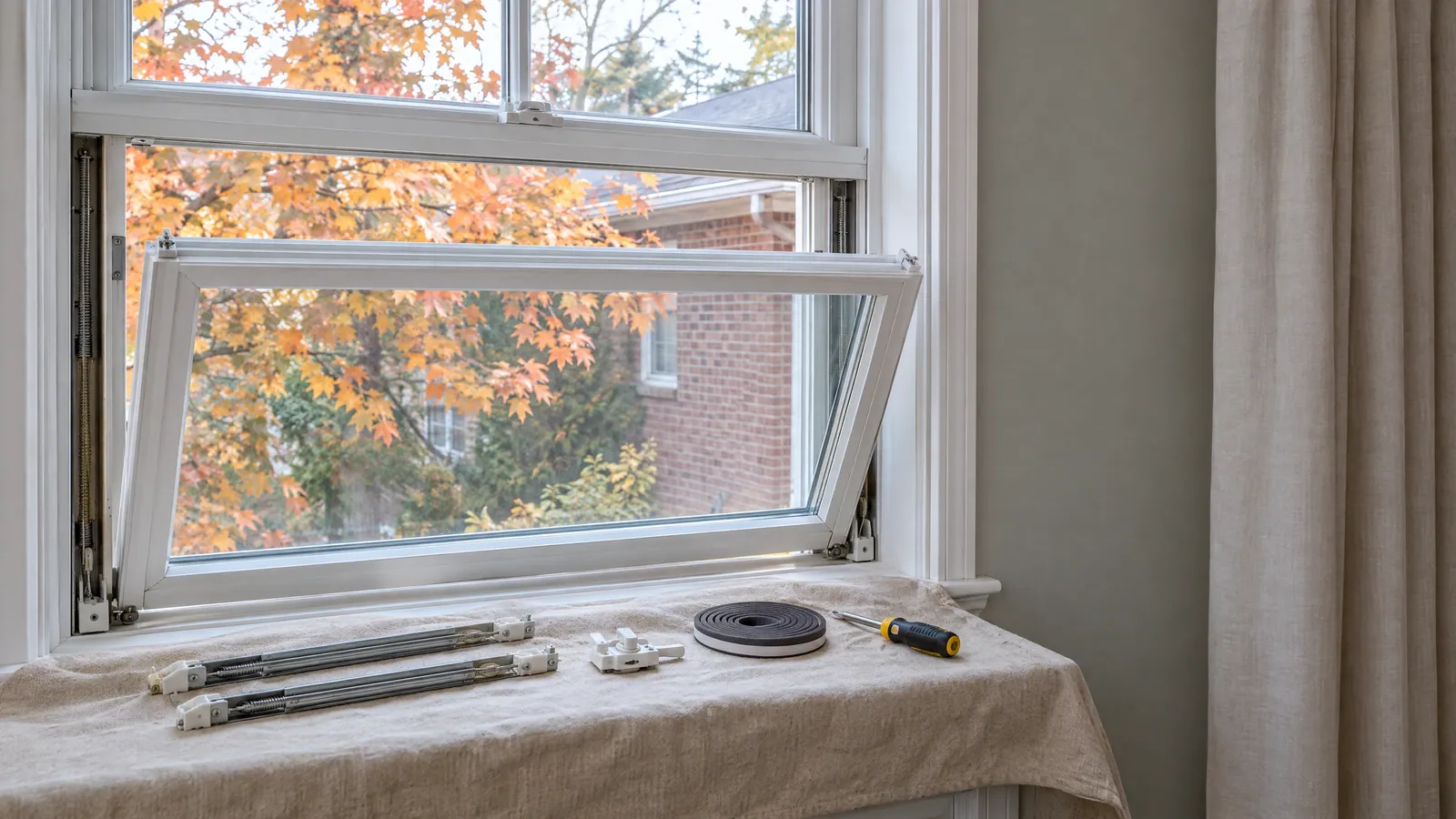
If the handle turns but the sash doesn't move, the operator gears have worn or the handle has stripped. On a casement or awning, the operator unscrews from the frame and a matching one goes in. Don't force a crank that binds; that's how the teeth go.
Sash drops or sticks
A hung sash that won't stay up has a worn or unhooked balance, the spring in the side channel. One that sticks may be swollen, painted shut or in a bent track. Balances come in set sizes, so the pro reads the label or measures.
Lock won't engage
Often the sash has shifted or the keeper has worked loose, and an adjustment fixes it. A cracked lock is replaced with one of the same footprint. Multipoint locks on casements may need the lock bar adjusted.
Drafts around the sash
Flattened weatherstrip, a sash that no longer pulls tight, or a sagging hinge. New weatherstrip and a hinge or lock adjustment usually close the gap.
Hard-to-find parts
Finding parts for discontinued windows
Plenty of windows from the 1980s and 1990s came from product lines that are no longer made. That doesn't mean the window is finished.
Photograph the hardware
Take close-ups of the operator, hinge, lock or balance with the sash open, plus any label on the frame, balance or spacer bar.
Match or adapt
Many parts follow common patterns, so a pro can often find a direct match or a universal part that fits the same holes.
Fit and adjust
The new part goes in and the sash is adjusted so it opens, closes and locks as it should. If nothing fits, the pro should tell you before suggesting anything bigger.
Before winter
Weatherstrip and seal work before winter
Most drafts come from around the sash, not through the glass. Weatherstrip, the foam, pile or rubber strip where the sash meets the frame, flattens and tears with use, and replacing it is small work that makes a room noticeably more comfortable.
Fall is the time, before the cold makes old strip brittle. Check the caulking where the frame meets the brick while you're at it, and the screen too; torn screens are a quick fix.
When people say a window seal has gone, they mean one of two things: the weatherstrip around the sash, a hardware repair, or the seal of the glass unit, which shows as fog between the panes and needs a new sealed unit.
Past repair
When hardware repair isn't enough
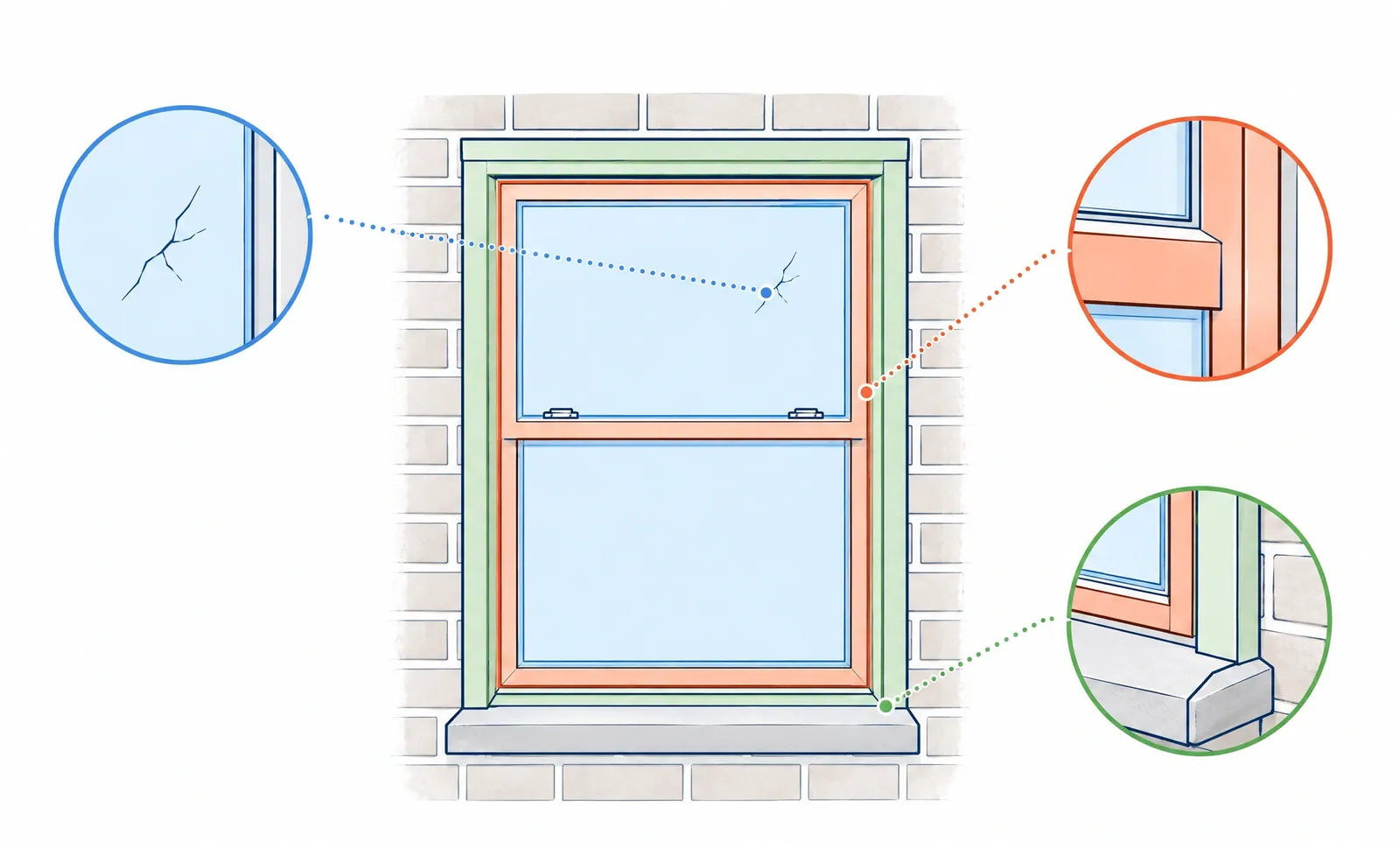
New parts can't save a frame that has gone. If the wood is soft at the sill, the vinyl has split at a corner, water is getting in, or the sash has warped, a repair puts money in the wrong place.
The same goes for a house where most windows have tired hardware, fogged glass and drafts all at once. At that point replacement windows may be the sensible route; our repair or replace guide weighs it up, and the windows overview compares all three levels of fix. The pro should show you what they're seeing, not just tell you.
Your quote
What affects the cost of a hardware repair
Hardware jobs are usually modest, and the price depends mostly on the part and the visit:
- Which part, and whether a direct match exists or one has to be adapted
- How many windows need the same fix, since doing them together saves a trip
- The window type: casement, awning, slider or double-hung
- Access, such as upper floors or windows behind built-ins
- Whether weatherstrip, hinges or locks are replaced in the same visit
A photo of the hardware and any label on the window helps the pro bring the right part the first time.
Older homes
Heritage wood windows: a different kind of repair
Original wood sash in Markham's heritage villages is repaired with carpentry and glazing: new cords, fresh putty, patched wood. The City's own heritage district plans make the point that in many cases only one component, such as a single sash, needs replacing rather than the whole window.
That work calls for a different specialist, and in the heritage districts it may need a heritage permit first. See wood window repair for what's involved.
Questions
Questions about cranks, locks and balances
Explore your options
Other ways to help a tired window
Local pros fix window hardware across Markham, including Milliken Mills, Thornhill, Buttonville and Berczy Village.
Tell us the window type and what it's doing
Add a photo of the crank, lock or balance, and any label on the frame. We'll pass it to a local pro who repairs window hardware, and they'll tell you whether the part can be matched.