Casement windows
Casement windows: fix the crank, the seal or the glass before replacing
Casements, the side-hinged windows that crank outward, are common in Markham houses built from the 1980s on. When one stiffens, drafts or fogs, the crank may be all that's worn. Operators, hinges, locks and the sealed unit can each be replaced without taking the window out of the wall. We connect you with an independent local pro who repairs casements and will tell you plainly when one is due for replacement.
- Cranks and hinges replaced on their own
- Fogged glass swapped, grilles matched
- Straight advice on repair or replace
How they work
How casements work and where they wear
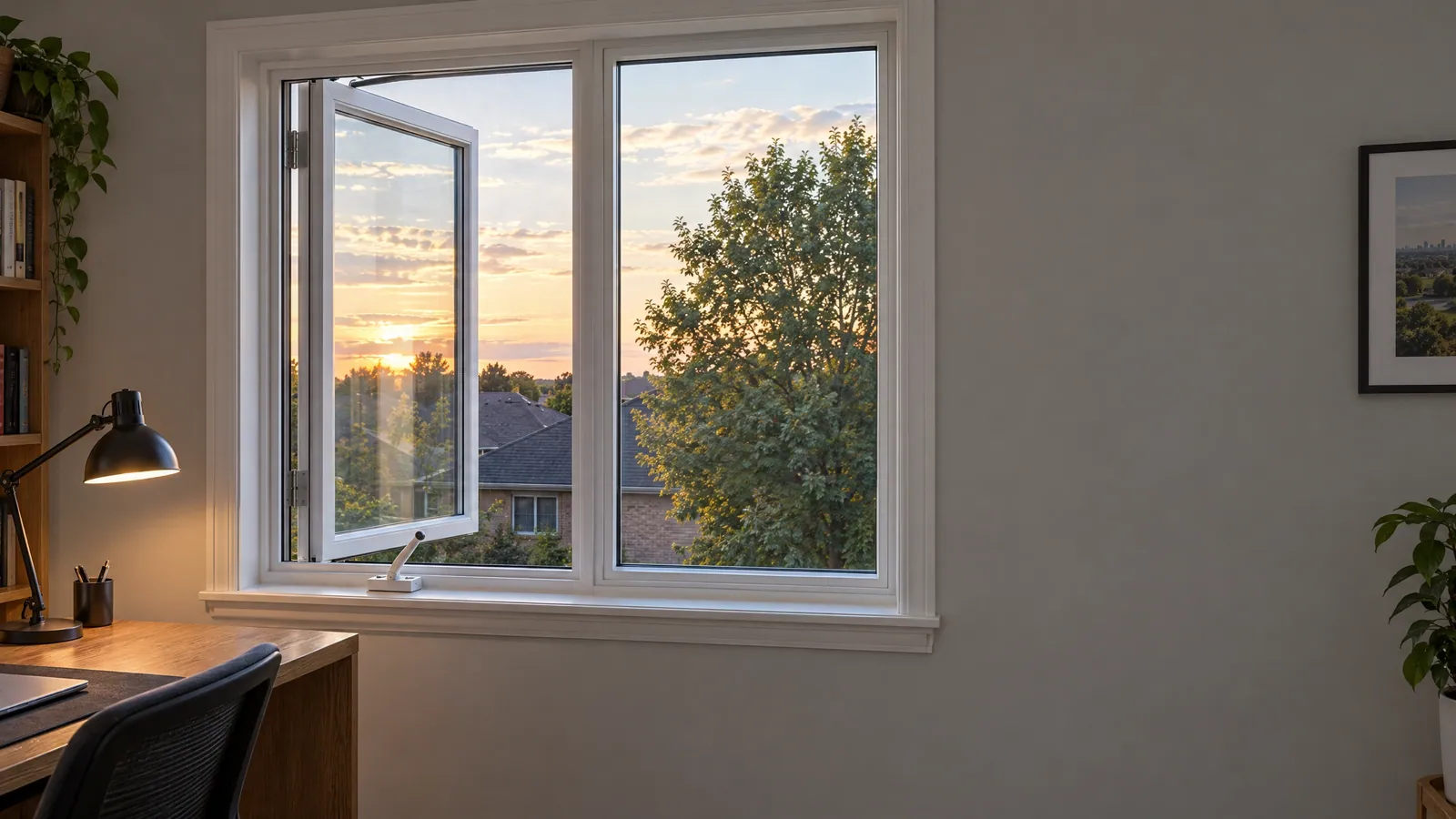
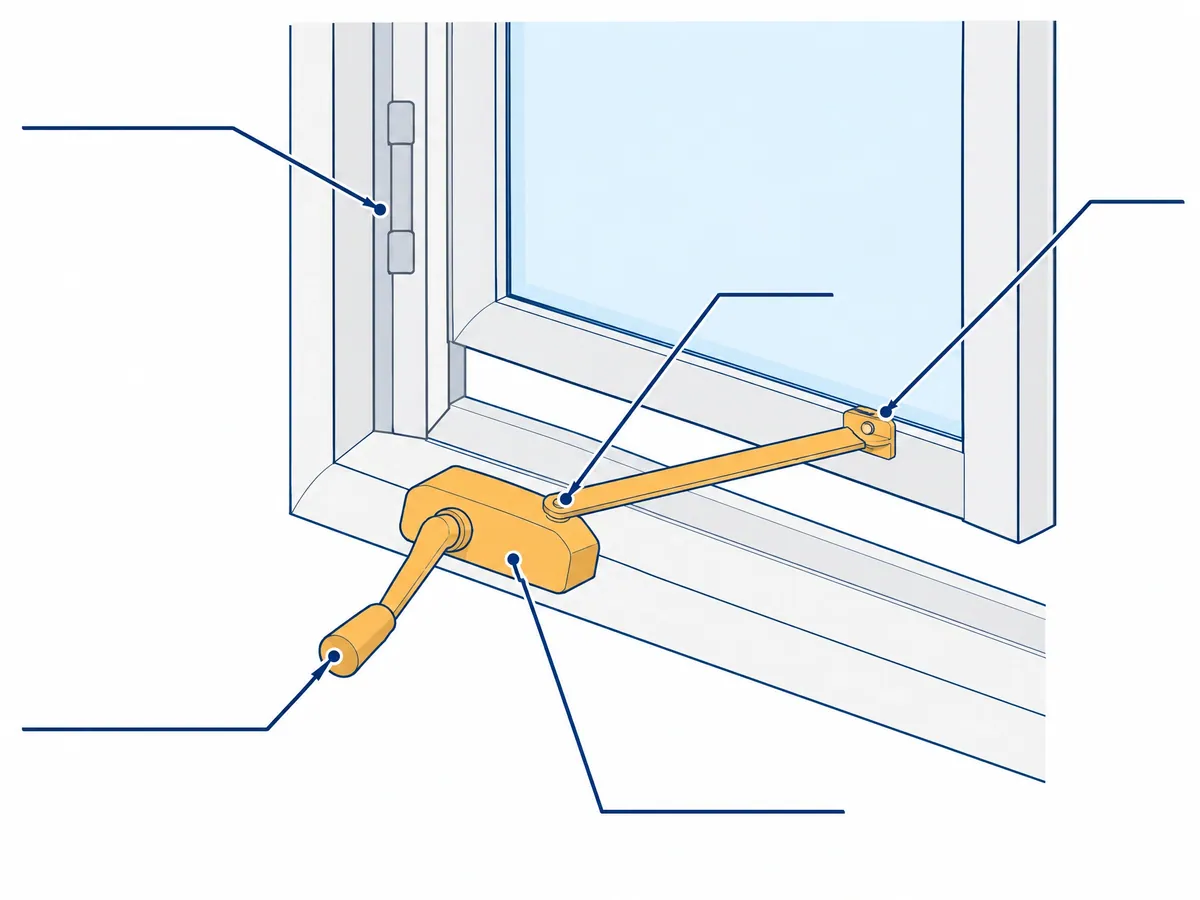
A casement sash hangs on hinge arms at the top and bottom of one side. Turning the crank drives a gear in the operator, which pushes an arm that swings the sash out. When it closes, the lock pulls the sash tight against weatherstrip all round the frame, which is why casements keep drafts out well when everything works.
Every one of those parts moves, and they wear before the frame does. The operator gears usually go first, especially on the windows you open most, followed by the hinge arms and the weatherstrip. The frame and glass normally outlast them. Other styles are covered in the windows overview.
Hardware
Crank operators, hinges and multipoint locks
Operators and cranks
Grinding, slipping or a handle that spins free all point to the operator. It's screwed to the sill and connects to the sash by an arm, so it can be swapped without touching the glass. Pros match it by style, hand and arm length.
Hinges
If the sash drags on the frame, won't close square or has dropped at the lock side, the hinge arms have worn or bent. They're sized to the sash and replaced as a pair.
Multipoint locks
Taller casements lock at two or more points through a bar along the edge, worked by one handle. If the handle moves but the sash stays loose, a keeper has shifted or a link has broken. That's usually an adjustment or a small part; window repair covers other lock faults.
Glass
Fogged casement glass and grilles
Fog between the panes of a casement means the sealed unit has failed, not the window. The sash is often lifted off its hinges and the glass changed on a bench, then rehung. The new unit is made to the same size and thickness, with the grille pattern built in.
Many 1990s and 2000s homes pair casements with a fixed picture unit or a half-round above, all with the same colonial grilles. Matching bar width and colour keeps the set reading as one window. The foggy windows page covers the glass swap in detail.
Replacing
Replacing casements: style, grilles and screens
When the frame is split or soft, or the sash has warped past adjusting, new casements are the answer. Vinyl casements suit most subdivision houses; see vinyl windows for frames, and ask the pro whether the product is ENERGY STAR certified if you're hoping for a rebate.
Keep the look: the same grille pattern, the same split between opening and fixed panes, and the same hinge side if furniture sits near the window. Where a room needs air but the sash would swing into a walkway, an awning window under a fixed pane is another option. New casements come with new screens, which sit on the inside because the sash opens out. Not sure it's time? Our repair or replace guide helps.
Your quote
What shapes a casement quote
Tell the pro how many casements you have and what each one is doing. The price follows:
- Repair or replacement, and how many windows
- The part: operator, hinges, lock, weatherstrip or glass
- Whether a direct match exists for older hardware
- Glass size, grilles and any coating
- Access to upper floors
Photos of the crank, the hinge side and any label on the frame help the pro bring the right parts.
Cooling
Air conditioning with casement windows
A standard window air conditioner needs a sash that slides, so it doesn't suit a casement. The usual options are a portable unit vented through a panel or kit that fits the casement opening, a through-the-wall unit, or another cooling system altogether. Whatever you choose, the kit should seal around the hose so rain and insects stay out.
If you're replacing windows in that room anyway, ask the pro about a different style for that one opening.
Questions
Casement window questions
Explore your options
Keep going
Local pros repair and replace casements across Markham, including Milliken Mills, Berczy Village, Box Grove, Cathedraltown and Angus Glen.
How many casements, and what's wrong with them?
Send a photo of each problem window and one of the crank. We'll pass it to a local pro who repairs and replaces casements, and they'll quote whichever makes sense.