Heritage districts
The heritage permit, the plans and the grant: windows in Markham's four heritage districts
In Unionville, Markham Village, Thornhill and Buttonville, changing a window needs a City heritage permit first, whatever the age of the house. The district plans ask for original frames and sash to be repaired, for replicas in the same material when they can't be, and for storms rather than sealed units; snap-in and tape grilles are ruled out. A new 2026 City grant can pay part of the cost of repairing original windows, and it asks for two professional quotes.
Which properties this applies to: four districts and designated homes
Markham has four heritage conservation districts under Part V of the provincial Ontario Heritage Act: Thornhill (the Markham side, east of Yonge Street, and the City's first district), Markham Village, Unionville and Buttonville. On top of those, hundreds of individual properties across the city are designated under Part IV, and most exterior alterations to them need a heritage permit too (Heritage Protection).
Two boundary points catch people out:
- Thornhill west of Yonge is in Vaughan. It has its own heritage district and rules, set by the City of Vaughan.
- Listed is not the same as designated. Ontario has given municipalities until 1 January 2027 to designate properties on their heritage registers or remove them (summary by Aird & Berlis). If your house is listed, check its status with the Heritage Section before ordering windows, since it could be designated before then.
The City's Heritage Districts page links each plan and boundary; the district brochure has the Heritage Section's contacts.
The Markham heritage permit comes first: Minor or Major
The City puts it directly: "Owners of all properties in a heritage conservation district must obtain approval for exterior alterations to property, new construction or demolition through a Minor or Major Heritage Permit application." That covers every property inside a district, not only the old houses, and replacing a window is an exterior alteration. Whether a like-for-like repair needs a permit is a question for staff.
Staff can approve alterations that comply with the plans, so work that follows the plan's window wording is the straightforward route. A building permit is a separate matter. The City's building permit page lists same-size window replacement among projects that don't need one, but that says nothing about heritage approval. Where both are needed, the heritage permit comes first.
The practical order: photograph each window inside and out, talk to the Heritage Section ([email protected]), get quotes that describe the work in the plan's terms, then apply. The City's grant only funds projects approved before work begins.
What the plans say about windows
The Thornhill, Buttonville and Unionville plans use near-identical window wording. Quoted briefly below; read the plan for your district before relying on any of it.
Repair original frames and sash
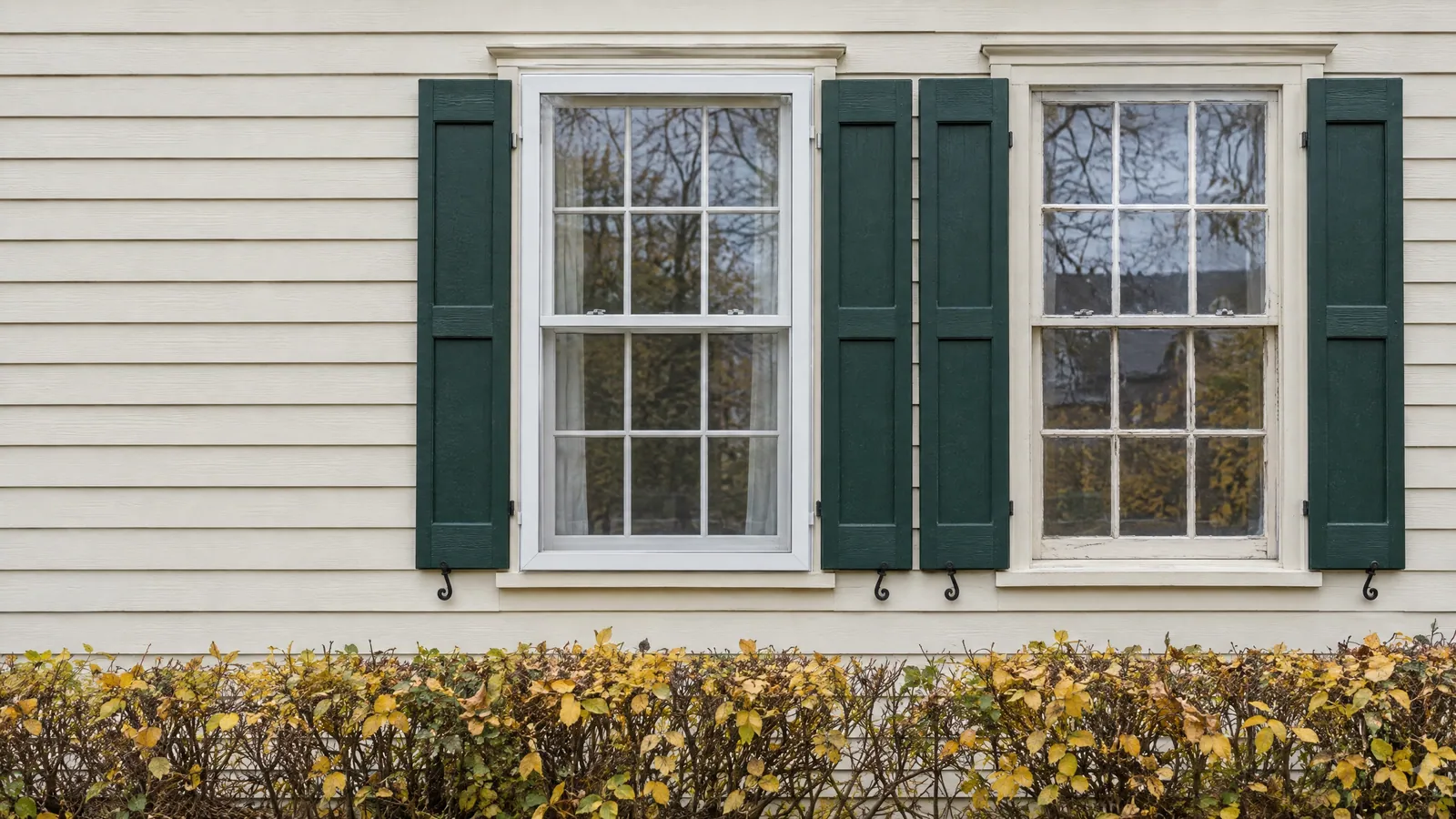
"Original window frames and sashes should be repaired, rather than replaced," and "Repairs should be limited to damaged portions." The plans also note that "in many cases, only a small component (i.e., a window sash) requires replacement rather than the entire unit." In practice: sash repair, new putty, a reglazed pane, or one new sash rather than a new window. Wood window repair describes that work.
Replicas in the same material
If a window really is beyond repair, "the unit should be replicated in the same material, style, and proportion." A true replica, with separate panes held by real muntins, is the preferred answer.
Double glazing only as a fallback, in wood, with exterior muntins
The Buttonville and Thornhill plans say "Original heritage windows in good condition should not be replaced with double-glazed units." Only if a replica isn't pursued is a double-glazed window "an option," and then "The unit should be made of wood, and be of the same size and proportion and possess the correct pane division (with externally adhered muntin bars)." Unionville's plan uses the older trade word: originals in good condition "should not be replaced with thermopane units," and any thermopane replacement "should also have true divided lites with real externally perceivable muntin bars."
The plans don't name vinyl, but by asking for wood they leave it out on heritage buildings. Non-heritage buildings inside a district are treated differently; Unionville's plan allows them a historically complementary approach, such as a more traditional window style (non-heritage guidelines).
No snap-in or tape grilles
"Snap-in interior muntins or tape simulations are not acceptable." The pane division has to read from the street as real bars.
Keep the openings as they are
"Do not alter original window and door openings to introduce modern stock sizes," and "New windows and doors should only be introduced on the rear or other inconspicuous elevations."
Markham Village's own rules: reuse old glass, no picture windows, storms for curved heads
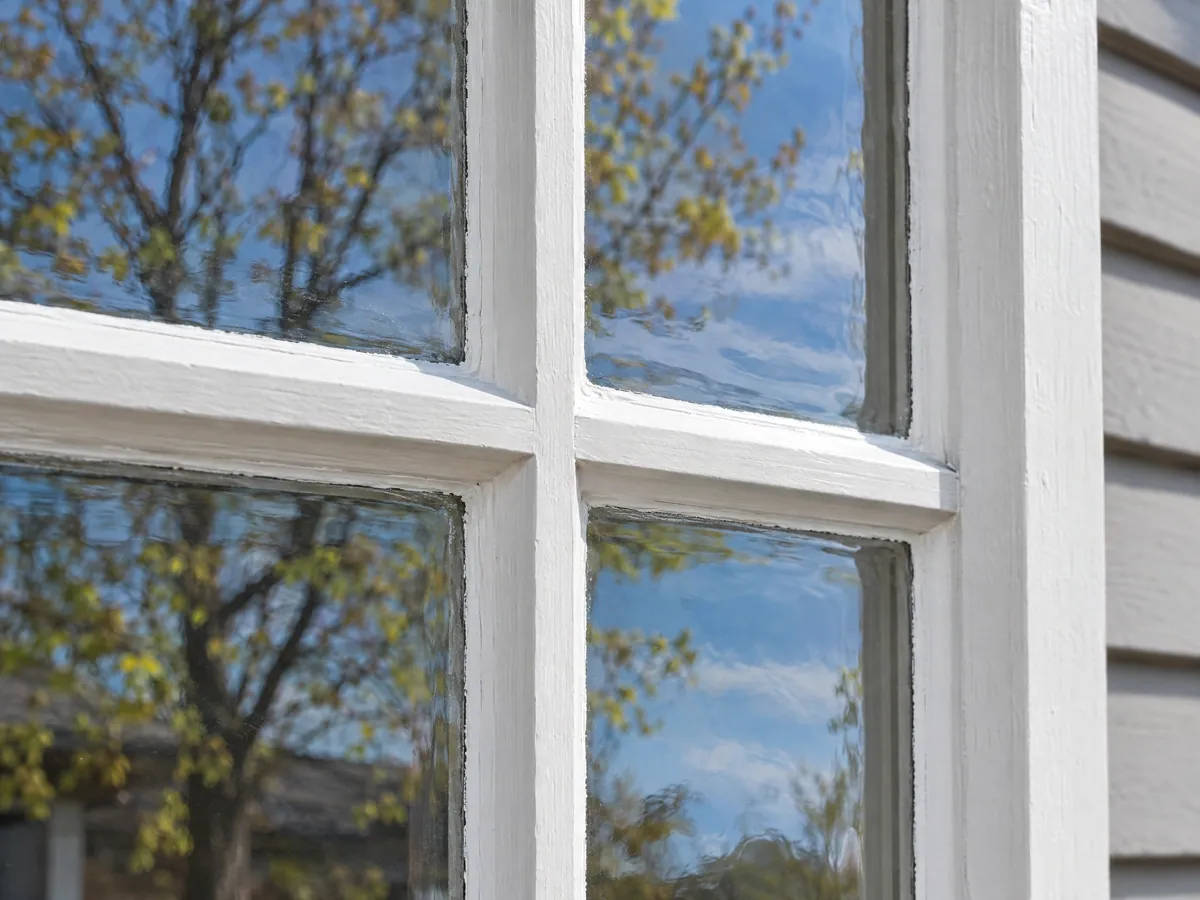
Markham Village has its own building policies and design guidelines, and on windows they go further than the other three plans. The most common window in the village's older homes is the double-hung wood sash, one-over-one or six-over-six, and the guidelines note that "Most 19th century window panes were made as crown glass and available only in small panes." Hence the rules:
- Keep the frame, or match it. "If the replacement of a window unit is necessary, reuse the existing frames with new sash or install new frames which match the size, detail, material and setback of the original."
- Keep the glass. "Reuse original glass whenever possible." Old glass has a slight ripple that modern glass doesn't.
- No picture windows on houses. "Picture windows are not desirable for residential buildings."
- Curved heads get fitted storms. Arched openings should have "custom-made wood storms, interior plexiglass, or interior metal storms," and "Use wooden storms whenever applicable since metal conducts cold."
Main Street Markham's plate-glass shopfronts are a separate case, and the City's grant also supports restoring historic storefronts. The plan dates from 1989 to 1991, so ask whether newer guidance applies. The Markham Village area page covers the village's typical windows.
Storm windows and doors: the plans' answer to energy efficiency
The plans point to storms rather than sealed units. "The use of traditional exterior storm windows is the most appropriate approach for energy efficiency and to protect the heritage window." Interior storms, or metal storms painted to match period colours, are listed as other options, and "The pane division should either match the original window or be simpler." For doors, a "traditional, simple screen/storm door of wooden construction is encouraged." A storm changes the look of the house, so confirm with the Heritage Section before ordering. Storm doors has more on choosing one.
The 2026 Heritage Property Grant: what's eligible and the two-quote rule
New in 2026, the City's Heritage Property Grant pays part of the cost of conserving heritage features. The 2026 guidelines (PDF) set the share, the caps and the minimum amount of work. The points that matter for windows:
- Eligible work includes "repair of deteriorated original elements such as doors and windows," and reconstruction that matches original materials, sizes and configurations.
- Not eligible: "short term, routine maintenance, including painting," "interior window coverings," and labour by the owner or tenant.
- Eligible properties are designated under Part IV, or in a district and identified by its plan as being of heritage value; the classes differ by district. Tenants can apply with the owner's written consent.
- Two professional quotes "for the identical scope of Eligible Work" from independent contractors. Heritage Section staff base the grant on the most appropriate quote, weighing cost, scope and the contractor's capability, not simply the lowest.
- Approval before work. Grants are only available for projects approved before work starts, and they're paid once the approved work is complete.
- Timing. Applications run on an annual cycle, with the deadline published by the City. One grant per property per calendar year.
A strong application describes the work window by window: which sash are repaired, which glass is kept, and whether storms are added. If your request is for the grant, say so, and ask for the scope to be written that way. The City's financial assistance page has the current intake.
The heritage property tax reduction for designated homes
Separately, designated heritage properties can have the municipal and education portions of their property taxes reduced. Eligibility and the application process are on the same financial assistance page; ask the Heritage Section whether your property qualifies.
Finding a qualified trade and preparing quotes
Heritage staff advise on restoration and keep a directory of skilled trades, a neutral place to start. Ontario doesn't make glazing a compulsory licensed trade (Skilled Trades Ontario), so ask about experience instead: wood sash repair, glazing putty, reusing old glass, and building wood storms.
We connect you with independent local professionals; we don't do the work ourselves. When the request is for a heritage house in Unionville, Thornhill, Buttonville or Markham Village, we look for pros who take on heritage wood-window jobs and pass them your photos and your district. If none covers your address, we'll say so. If you sign a contract at home, Ontario's home service contract rules give you a cooling-off period.
Ready to start? Request a heritage-window specialist and a written quote you can use for your permit discussion and your grant application.
Frequently asked questions
Do I need a heritage permit to replace windows in Unionville?
Yes. Unionville is one of Markham's four heritage conservation districts, and the City requires a Minor or Major Heritage Permit for exterior alterations to every property inside a district, whether or not the house itself is old. Replacing a window counts, so talk to the Heritage Section before ordering. The Unionville area page covers the village's typical windows.
Will the City accept vinyl windows on a house in a Markham heritage district?
Not on a heritage building, in practice. The plans don't name vinyl, but where a window can't be repaired they ask for a replica in the same material, and where a double-glazed unit is allowed they ask for wood. Non-heritage buildings inside a district are treated differently; Unionville's plan allows a historically complementary approach. Confirm your building's class with the Heritage Section.
Are snap-in or tape grilles allowed on heritage windows?
No. The Thornhill and Buttonville plans say it plainly: "Snap-in interior muntins or tape simulations are not acceptable." Where a double-glazed wood unit is accepted, the muntin bars have to be on the exterior. Grilles sealed between the panes are unlikely to meet that, so ask staff before ordering.
Can the original wavy glass be kept when a heritage sash is repaired?
Usually, and Markham Village's guidelines ask for it: "reuse original glass whenever possible." A careful restorer takes out the old putty, lifts the panes, repairs the sash and reglazes with the same glass. Old panes are fragile and one may crack in the process, so ask how the pro handles that and whether matching old glass can be sourced. See wood window repair.
What does the Markham heritage grant cover?
Part of the cost of conserving heritage features on eligible properties. The 2026 guidelines name "repair of deteriorated original elements such as doors and windows" and reconstruction that matches the original. Painting and other routine maintenance, interior window coverings and your own labour don't count. The property must be designated, or identified as heritage in its district plan, and the work approved before it starts.
Why does the heritage grant ask for two quotes, and can I get both from one request?
The City wants two professional quotes for the identical scope so staff can judge the work and the cost; the grant is based on the most appropriate quote, not simply the lowest. One request can start both: say it's for the grant, and we'll try to pass the same scope to two independent heritage pros. We can't promise two cover every address. Start a request.